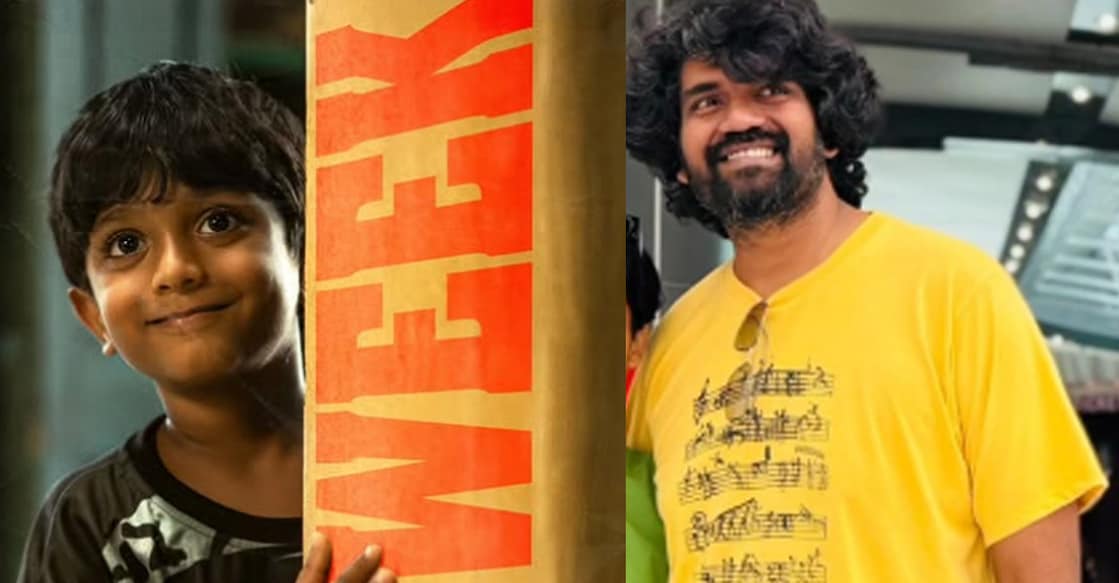
A still from Balan: The Boy alongside writer Jithu Madhavan. Image: Onmanorama
Balan: The Boy has an unusual story even before the first frame begins.
The film was written by Jithu Madhavan, the filmmaker behind Romancham and Aavesham. But when the idea first came to him, he wasn't planning to hand it to another director.
Jithu Madhavan originally wanted to direct Balan: The Boy himself.
Instead, the film eventually went to Chidambaram, the filmmaker who had just turned Manjummel Boys into one of Malayalam cinema's biggest modern successes.
And according to Jithu, that change may have been exactly what the film needed.
The Story Was Born During Romancham
Jithu revealed that the basic idea for Balan: The Boy had already been in his mind while he was making Romancham.
After finishing that film, he began working on the screenplay. His intention was to move directly into Balan.
But producer Anwar Rasheed suggested something different.
He felt that Jithu should make Aavesham first because the film suited the energy of the moment, while Balan was a more timeless story that could wait.
Jithu eventually agreed.
The decision changed Malayalam cinema in an unexpected way: the young filmmaker who wanted to make Balan went on to direct Aavesham instead, while the original story waited for its own director.
Then Chidambaram Entered the Picture
The turning point came through actor Sajin Gopu.
According to Jithu, Sajin mentioned that Chidambaram was looking for a story to direct. Jithu initially considered pitching him another idea.
But when Chidambaram heard the basic premise of Balan, he immediately connected with it.
What began as Jithu Madhavan's next directorial project slowly became a collaboration between two filmmakers with very different cinematic instincts.
That difference became one of the most important parts of the film's development.
Two Filmmakers, Two Very Different Approaches
Jithu's writing instinct comes partly from commercial cinema. He has said that he naturally looks for scenes that can create a strong theatrical high.
Chidambaram approached the screenplay differently.
Instead of constantly searching for big dramatic moments, he encouraged Jithu to follow the emotional movement of the story.
That resulted in several scenes being toned down or removed because they were becoming too dramatic without actually helping the narrative.
For Jithu, this was a new writing experience: deliberately removing moments that might have worked theatrically because they weren't necessary for the characters.
The Most Interesting Part: Jithu Thinks Chidambaram Made It Better
Writers-directors rarely get the opportunity to publicly admit that another filmmaker might have handled their own story better.
Jithu did exactly that.
Looking back, he said he doesn't believe he could have made Balan: The Boy into the film it became, and that he was genuinely happy Chidambaram directed it.
It wasn't simply a case of handing over a finished script.
The two filmmakers repeatedly met, visited locations together and reworked the screenplay so that it could retain Jithu's core idea while also reflecting Chidambaram's filmmaking sensibilities.
In other words, the screenplay itself changed because the director changed.
Even the Lead Cast Wasn't Built Around Stars

Farzana Palathingal and Adhisheshan in Balan: The Boy. Image: Outlook India
Another unusual decision was the film's casting.
The central roles were given to relatively unfamiliar faces, with Adhisheshan playing the young Balan and Farzana Palathingal portraying his mother.
The film also features Muhammed Zinaan, Jean Paul Lal, Beena Antony, Dolly June and others, with Tovino Thomas appearing in a prominent supporting role.
The decision helped the mother-son relationship feel less like a conventional star vehicle and more like an intimate story built around characters.
Why the Mother-Son Story Was Important
At its centre, Balan: The Boy is about a mother and son whose lives are shaped by secrecy, movement and survival.
The story follows Balan as he tries to understand his past and find his missing mother. The film gradually reveals why the two were forced to live the way they did.
Rather than presenting motherhood through the familiar image of the endlessly selfless mother, the film gives its central woman complicated motivations and morally difficult choices.
That was one of the reasons Jithu wanted the story to feel different from conventional mother-son dramas.
It Reached Cannes Before Reaching Theatres
Before its worldwide theatrical release on June 19, 2026, Balan: The Boy received international exposure through a market screening at the Marché du Film during the 2026 Cannes Film Festival.
The film was subsequently released in Malayalam, Hindi, Tamil, Telugu and Kannada.
It later arrived on ZEE5, where it became available to a much wider audience from July 31.
Watch the Trailer
The official trailer from KVN Productions introduces the film as an emotional mystery built around Balan's childhood, his relationship with his mother and the secrets surrounding their past.
A Film That Exists Because Someone Changed His Mind
There is an interesting lesson hidden inside the making of Balan: The Boy.
If everything had gone according to the original plan, Jithu Madhavan might have directed the film himself immediately after Romancham.
Anwar Rasheed's suggestion changed that plan.
Jithu then made Aavesham.
Sajin Gopu introduced the possibility of Chidambaram directing the story.
Chidambaram saw something in the idea and brought his own sensibility to it.
And the writer who originally wanted to direct it now believes that the film benefited from someone else sitting in the director's chair.
Sometimes the most interesting creative decision isn't choosing what to make next. It's knowing when someone else should make the story you started.
That makes Balan: The Boy more than another collaboration between two successful Malayalam filmmakers. It is a rare example of a filmmaker willingly stepping away from his own directorial plan — and discovering that the story may have found a better home elsewhere.